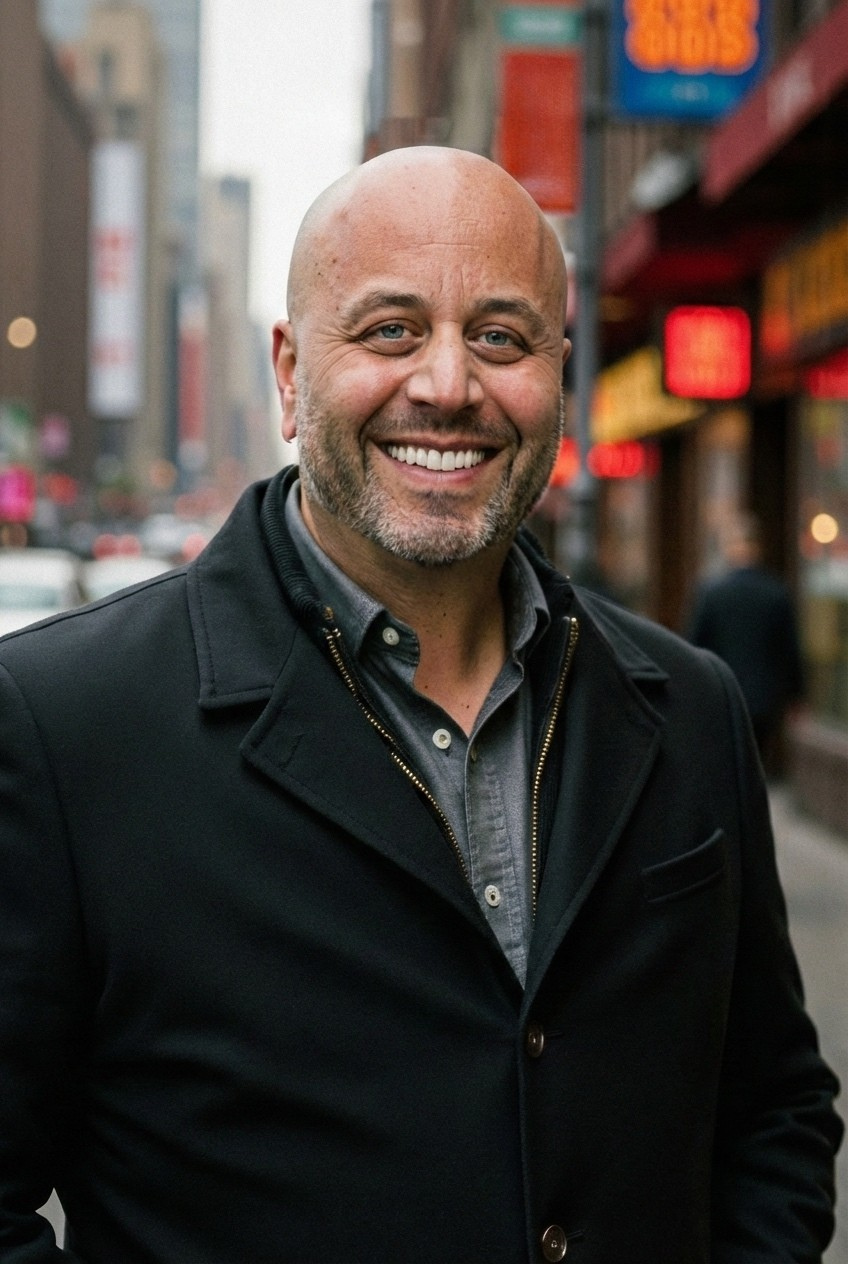
Perez Willie-Nwobu found his path through the power of therapy. His startup company is designed to create that access for more people like him.
There are weeks when life doesn’t just knock – it kicks the door in.
For Perez Willie-Nwobu, it wasn’t one hardship. It was divorce papers, deportation proceedings, unemployment — and, in the middle of it all, the life-changing news that he was about to become a father.
“The world just collapsed,” he says.
He came to the United States for school with a simple plan: graduate and build a life. Two years in, his family could no longer afford tuition. He left Kentucky to work construction in Virginia Beach, laying tile, demolishing buildings, anything to earn his way back.
Not a vacation spot to be sure in the face of abuse from an employer who knew he was vulnerable. An immigrant. Alone. Disposable.
So, he moved again.
A bus ticket promising an opportunity in New York felt like hope. It dropped him in Buffalo – not the New York of bright lights and lyrics, but a place where he was able to rebuild.
In Buffalo, Willie-Nwobu found community his future co-founder Josh Onoh, and eventually a place at the University at Buffalo, where he not only deepened his technical skills but entered an ecosystem that treated his idea like it mattered.
This is when a wrong turn near the Canadian border triggered deportation proceedings and he subsequently learned he was about to become a father.
The pressure was suffocating.
Where he comes from, you pray through pain. Therapy isn’t part of the cultural vocabulary. But toughing it out wasn’t working.
So, he chose counseling.
Inside those sessions, a question shifted everything: What does success look like — not professionally, but personally?
The answer became clear.
First: empower fathers, especially those who feel like one mistake means their world is over.
Second: help people protect their mental health
That clarity became Nara Therapy, named after his daughter, Chinara. “Nara” means to receive. To receive help. To receive support.
With initial support from University at Buffalo to develop their idea through Nara Therapy, the team recognized a broader need. Burnout was rampant in workplaces. Universities were stretched thin. Healthcare workers were carrying invisible loads. Supporting individuals was important — but supporting entire systems could multiply impact.
That’s where Launch NY entered at a pivotal moment.
Initially, Nara Therapy focused on direct-to-consumer support. But deeper research revealed a larger opportunity: organizations were desperate for structured, measurable mental health solutions. Shifting from B2C to B2B meant rethinking pricing models, sales cycles, and market positioning, and moving quickly.
Launch NY provided not just capital, but pressure-tested guidance. They pushed the team to expand their customer discovery efforts. To understand the market deeply. To articulate exactly how Nara Therapy would generate revenue and demonstrate outcomes. Launch NY’s investment of $50,000 gave Nara Therapy the runway to pivot confidently and the credibility to pursue larger institutional clients.
“I don’t know if we would have been able to make that switch without Launch,” Willie-Nwobu says. “It came at a real pivotal time.”
Today, Nara Therapy is targeting healthcare systems, universities, first responders, and athletic departments, environments where burnout is normalized and support is often insufficient. Buffalo isn’t just where he landed. It's the proving ground where local partnerships became proof of concept for national growth.
“I ran here from pain,” he says. “Now I want to build here.”
Therapy gave him tools he didn’t know he needed. There was a time when anxiety shaped how he moved through the world, how long he could hold a conversation, how safe he felt in his own body. Counseling didn’t erase the past, but it created space for a different future.
That’s the outcome he chases now — not headlines, but transformation. He imagines a nurse navigating stress without panic, a student finishing a semester without unraveling, a parent able to be fully present at home after a demanding day.
When PWillie-Nwobu thinks about legacy, he doesn’t measure it in valuation or profitability. He thinks about the impact, the fathers encouraged, the minds steadied, the communities strengthened in Buffalo and beyond.
Sometimes, receiving isn’t about taking. It’s about accepting support and using it to help others rise.