Cellsense is a sustainable escape hatch for the fashion industry’s brutal microplastics problem
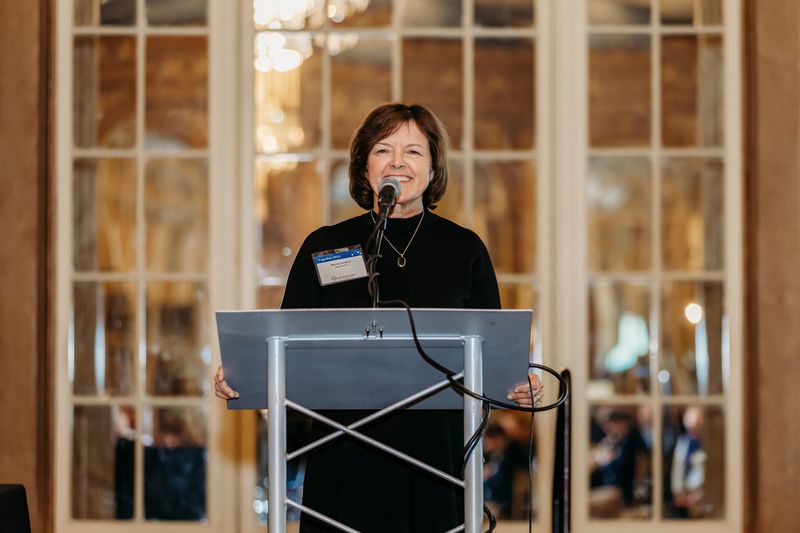
At 17 years old, Aradhita Parasrampuria moved from her home in India to New York City to attend Parsons School of Design.
A decade later, Parasrumpuria is the founder and CEO of a biomaterials startup that makes sustainable embellishments for the fashion industry.
Her unique ability to create compostable beads in scalable, humane conditions rather than plastics that emerge from sweatshops was the tailwind that won her a $1 million investment from the 43North accelerator.
Now, Parasrampuria is moving to Buffalo to establish full production and meet the vast demand for her company’s products. Buffalo has a strong pipeline of advanced manufacturing startups, including several that have come through the 43North program.
“Buffalo was a good fit for our company because we see Cellsense as not just a fashion company, but really a materials manufacturing platform,” Parasrampuria said. “Seeing Buffalo’s rich history of manufacturing and people’s focus and interest in that, we felt like this was truly the right place for us to set up shop and build.”

The immediate plan is to establish a pilot production facility in Buffalo that is capable of the fashion industry’s demand for Cellsense’s compostable beads. If all goes well, the plant will be living proof of Cellsense’s expectation that its process can make beads 20 times faster and 70% cheaper while also eliminating sweatshop labor and creating zero waste.
It’s a heady proposition. But it’s born of experience.
Parasrampuria hails from a region in India where the environmental and human toll of the fashion industry is visible. So the production side of the industry was on her mind as she parlayed bachelor’s and master’s degrees at Parsons into a job at famed luxury fashion label Tory Burch, where they consistently fielded requests for garments made from sustainable materials.
The problem was that when it came to embellishments, the supply chain was unprepared for the new sourcing and manufacturing processes.
Even Tory Burch was hard-pressed to find a sustainable bead.
Parasrampuria decided to investigate an engineered process that transforms algae and cellulose into compostable beads. When she received encouragement from Tory Burch, she decided to quit her job to pursue the idea fulltime. One of her former managers at Tory Burch remains on the Cellsense board.
Parasrampuria applied to 43North earlier this year after completing the ACCEL program at Greentown Labs, a Boston-based climate-tech incubator. She describes being restless with the company’s R&D phase and eager to begin fulfilling orders.
“We’re currently facing the wonderful problem of having more demand than we can meet,” she said. “So our goal over the next year is being able to scale production and see our material being used by companies around the world.”