The Nichols graduate spent 26 years at Fidelity, making early investments in companies including Tesla, SpaceX, Google and Nvidia. After serving as a judge at the final 43North competition, he sees a promising future for his hometown.
Ramin Arani was among a group of Fidelity investors visiting Tesla's California factory when Elon Musk offered to give them a tour.
Arani was an early investor in the electric vehicle company through Fidelity Investments, where he spent 26 years helping manage billions of dollars in assets. Visiting companies and getting to know their leaders was a central part of his investment strategy.
The factory was enormous, so they climbed into a golf cart. Musk took the wheel, simultaneously explaining his vision for Tesla and navigating the sprawling facility.
"It was a pretty adventurous spin around the company," Arani recalled.
It's the kind of story that comes from a career spent with a front-row seat to the beating heart of the modern American economy.
Arani was an early investor in Google and Nvidia. He helped Fidelity invest in SpaceX in 2014, when Musk was already talking about building a satellite communications network and sending humans to Mars. He spent time with the leaders of major pharmaceutical companies and invested in Italian luxury fashion company Brunello Cucinelli, eventually joining its board.
Along the way, he developed a philosophy of investing in the people behind a company's success.
These days, Arani leads asset management efforts at LionTree, an investment and merchant banking firm focused on technology, media and telecommunications.
And he's taking a closer look at his hometown.
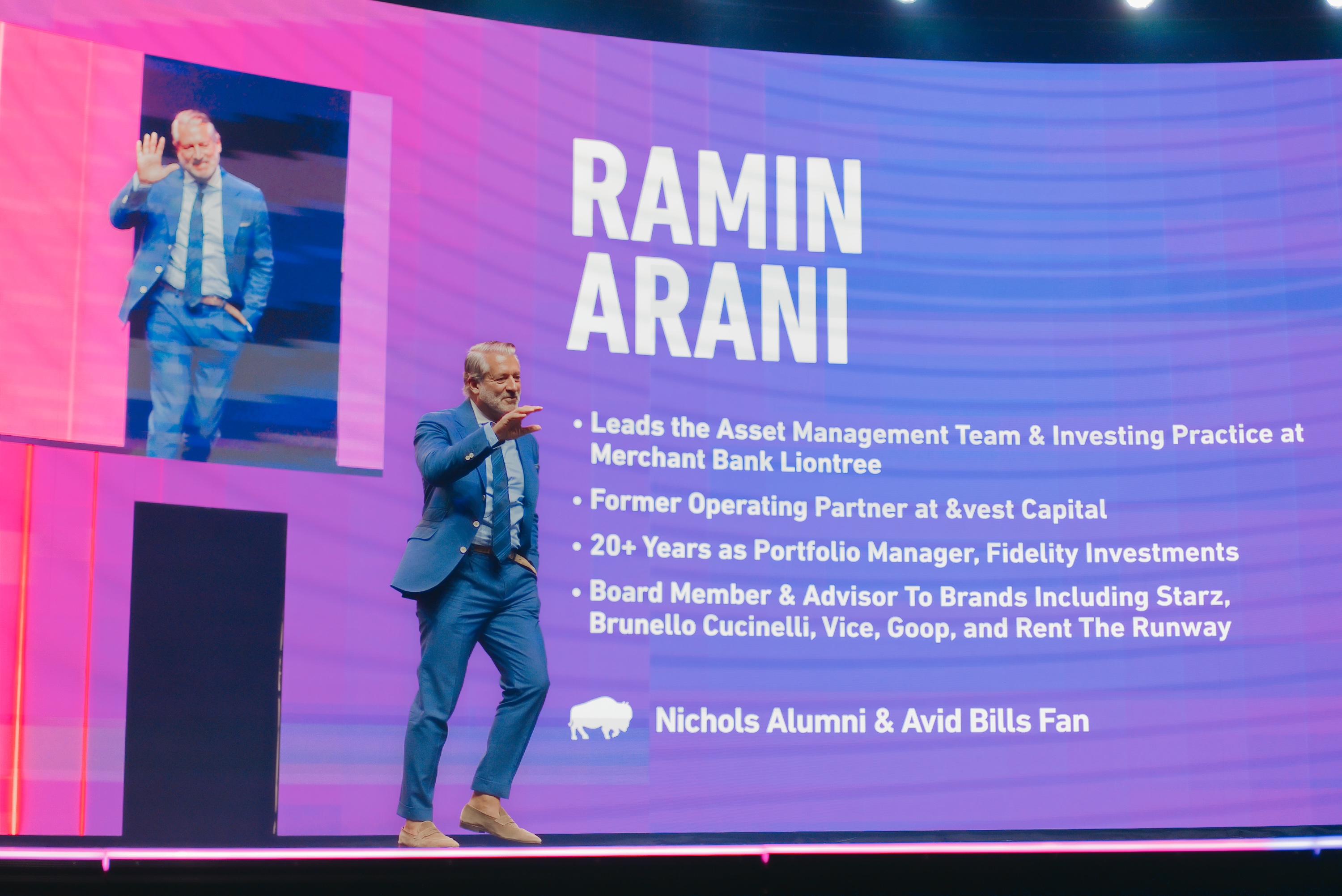
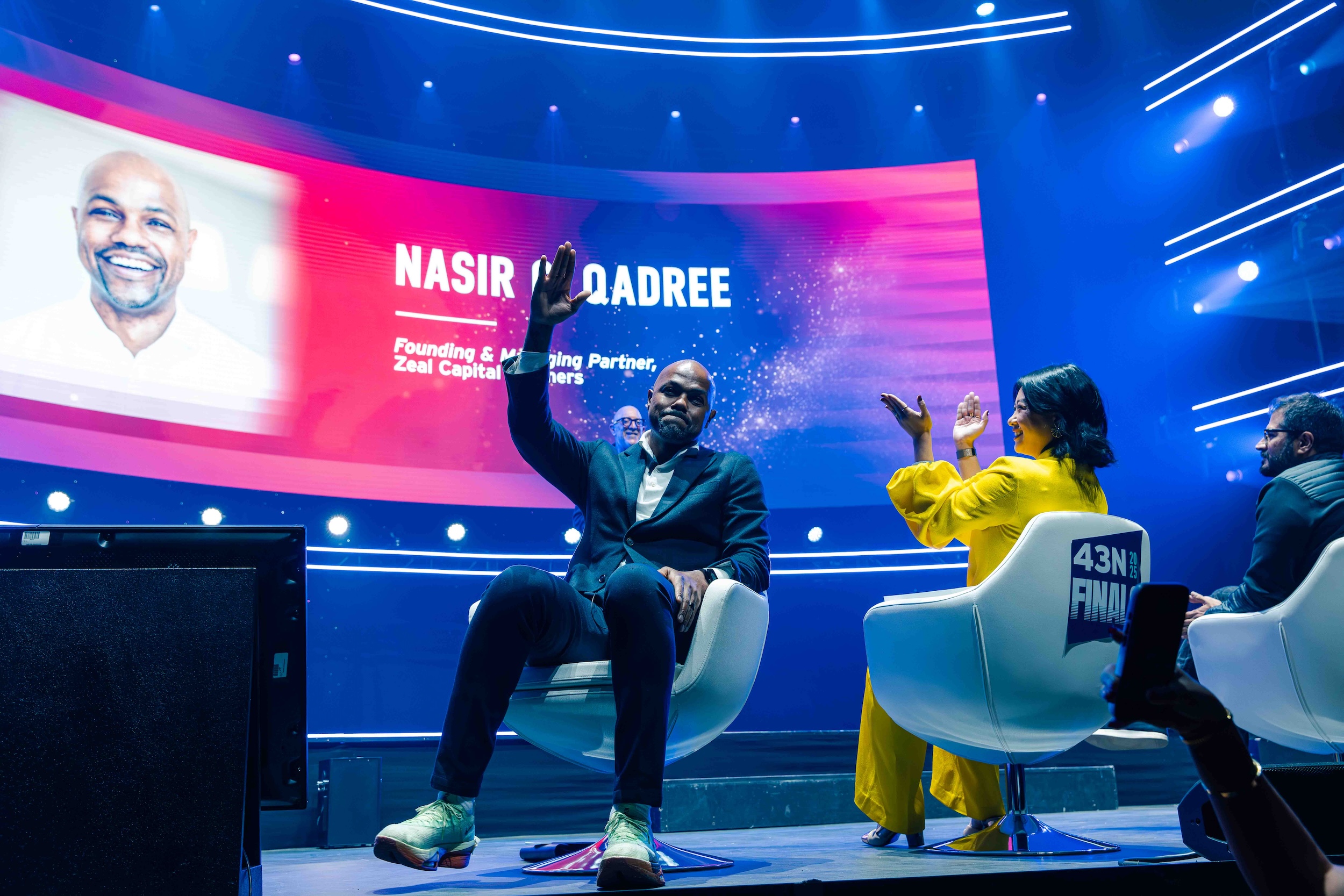
Arani grew up in the Buffalo suburbs and graduated from Nichols School before leaving for Tufts University in 1988. He returned last week as a judge for the final 43North startup competition, where five companies received $1 million investments and committed to building their businesses in Buffalo.
He left impressed by the quality of the companies, the sophistication of Buffalo's startup ecosystem and the city's economic trajectory.
Series B sat down with Arani to discuss his remarkable career, the lessons he's learned from some of the world's most successful entrepreneurs and why he believes Buffalo has an opportunity to build something special.
You grew up in Buffalo, but your story actually starts in Iran. How did your family end up here?
I was born in Iran. My parents met in the United States, but they moved back to Iran because my father had to serve in the military. After about five years, they decided to return to the U.S.
My father is an invasive cardiologist, and Buffalo General had a very good cardiac group, which it still does today. That's how we ended up in Buffalo when I was 2 years old.
We lived in Snyder and then East Amherst. I went to Maple East Elementary and eventually Nichols, starting in seventh grade and continuing through high school.
You left for Tufts in 1988. Did you imagine you'd end up with a career in finance?
Not necessarily. I studied international relations and economics, with a focus on French. I actually thought I might become a journalist.
I spent a summer working for Ted Koppel at ABC News, and when I graduated, I applied to programs in both journalism and investing.
I ultimately chose Fidelity, where I started as a research analyst in Boston. I ended up staying there for 26 years.
I wouldn't say I had any definitive intention of leaving Buffalo forever, but I also didn't have a plan to come back. It really depended on where my professional and family life took me.
Twenty-six years at Fidelity is an extraordinary run. How did your career evolve?
I started as an analyst covering defense and aerospace companies. Then I researched real estate investment trusts during the big REIT IPO boom of the early and mid-1990s.
From there, I moved into retail, covering companies like Home Depot, Macy's and Walmart, and eventually managed a roughly $400 million fund focused on retail companies.
In the late 1990s, I became Fidelity's healthcare sector leader, managing about $3.5 billion in healthcare investments.
Eventually, I moved into managing a much larger portfolio, which I ran from 2008 until my retirement in 2018.
Every step of the way was about learning. Learning about companies, learning how to make investment decisions, developing my own portfolio management style and learning how to work with people.
I think curiosity has been one of the most important elements of whatever success I've had.
You were an early investor in some of the companies that went on to define the modern economy. What did you learn from getting to know their founders?
A big part of my process was visiting companies. I probably spent half my time on the road, meeting executives, seeing operations and trying to understand what made a business special.
We were very early investors in Tesla. We invested in SpaceX in 2014. We were early investors in Google and Nvidia, back when Nvidia was primarily known for making chips for video games.
I spent a lot of time with Jensen Huang at Nvidia and with leaders across the healthcare industry, including major pharmaceutical and biotechnology companies.
One of the great opportunities as a growth investor is to identify companies that are true innovation machines. They can be in technology, healthcare or consumer businesses. The common thread is that they're creating something meaningful and have the ability to continue innovating.
Let's stay with Elon Musk for a moment. You also had a memorable experience with him at SpaceX.
We invested in SpaceX through several Fidelity funds in 2014.
On one visit, Elon pulled out a blank sheet of white paper and started explaining his vision for the company.
First, he wanted to build a better rocket. Then he wanted to use that rocket to launch satellites commercially for other companies. Then he wanted to develop better satellites himself and launch his own communications network, which ultimately became Starlink.
And then he explained that, as an investor, you had to be comfortable with the idea that he intended to spend every dollar of profit the company generated pursuing his ambition to go to Mars.
That was part of the investment proposition. You had to understand and believe in the long-term mission.
You also became deeply involved with Brunello Cucinelli, the Italian luxury fashion company. That's quite a different business from Tesla or Nvidia. What attracted you to it?
I met Brunello in 2011, and we became one of his first major outside investors in 2012.
What drew me to the company was his philosophy of humanistic capitalism.
For nearly 50 years, he's built his business around the dignity of workers. He believes in treating employees with tremendous respect, paying them well, providing wonderful working conditions and creating a company that supports the people who make it successful.
He also has a deep commitment to nature and the environment. He purchased dilapidated warehouses in the valley near his company, tore them down and restored the land to its natural state. He's a true visionary.
We became large shareholders because we believed in his philosophy and his vision for growing the company. That relationship ultimately led to my joining the board.
You retired from Fidelity in 2018, but you didn't exactly slow down. Why did you decide to become CFO of Vice Media?
My initial goal was to take some time, join a few boards if possible and invest for myself.
I'd been an investor in Vice through Fidelity and had served on its board. The company was going through a challenging period, but I believed in its mission and its approach to telling important stories from around the world.
I joined as CFO in 2019 and spent about two years there.
One of the things I wanted from that experience was to learn what it meant to be an operator. As an investor or board member, you have a seat at the table, but it's different when you're in the trenches, helping an executive team run a company every day.
I think that experience made me a better investor because I understand some things differently now, having been on the inside.
Today you're at LionTree, investing in growth companies. After everything you've seen, what are the qualities you look for in a business?
My investment philosophy really hasn't changed that much over the years.
First, you have to believe in the mission of the company, and you have to believe that its founders and executives genuinely believe in that mission.
You need a strong culture. You want a company that is innovative, whether that's through technology, new ideas or a different approach to an industry. Innovation is one of the key things that unlocks growth.
But ultimately, it comes down to people.
When you invest in a company, you're investing in the people who lead it and the people who work there at every level. You need to understand whether they're aligned, whether they share a common goal and whether they're all pulling the oars in the same direction.
Those are the things I've always looked for, and they're still what I look for today.
Let's talk about Buffalo. You've spent most of your adult life elsewhere, but it sounds like the city has remained a big part of your identity.
I've always loved Buffalo.
Even when I was only coming back for holidays, Buffalo remained central to my life and my family.
My three older daughters grew up in Boston during the heyday of the Patriots, but they were all born Bills fans. To this day, they're as rabid about the Bills as I am. I also have a baby daughter who lives in New York City, and she was born a Bills fan, as well!
A lot of that connection is about values. The way I was raised in Buffalo, my parents, my friends, my experience at Nichols. All of those things helped shape who I am.
There's definitely a Buffalo ethos, and it's something I've tried to pass along to my daughters.
There's also a powerful network of Buffalo expatriates who have gone on to do interesting things around the world. Have you experienced that?
Absolutely. I think there are two types of relationships.
There are the relationships you build growing up in Buffalo that stay with you throughout your life. And then there are the people you meet elsewhere who happen to be from Buffalo.
There's this immediate magnetism when you discover that connection.
Gary Ginsberg is a good example. We met when he was a senior executive at News Corp. We made the Buffalo connection and became fast friends. He's gone on to have an extraordinary career, and we've stayed close, talking about everything from geopolitics to Buffalo to the Bills and Sabres.
Mary Owen, Ralph Wilson's niece, is another dear friend I met through mutual connections.
It's funny. You meet someone out in the world who's from Buffalo, and there's almost this immediate feeling that you're part of the same club.
You were a judge at the final 43North competition last week. What did you think of the experience?
I really didn't know what to expect.
I'd heard a little about the competition from Gary Ginsberg, who had been a judge in the past, and I'd gotten to know Colleen Heidinger. But I was blown away.
The quality of the companies applying for the opportunity was impressive. The level of professionalism, both from the companies and from the 43North organization, was extraordinary.
And the economic development impact that 43North has had, and will continue to have, is something I didn't fully appreciate until I was part of the experience.
I think it's quite profound. I'm not aware of something quite like it in other cities, and it really does promote and spur economic growth.
It was exciting to be part of it.
You've spent your career evaluating companies and investment opportunities around the world. When you look at Buffalo today, what do you see?
For several decades, Buffalo was seen as a city that time had passed by. It had a strong industrial foundation, but as many of those jobs moved offshore, Buffalo suffered.
What's impressive to me now is the revitalization and reinvigoration of the city around growth industries like healthcare and technology. Maybe that transformation took longer than it could have or should have. But it's happening.
I think that creates a powerful launchpad for Buffalo's future. The city is developing the industries, talent and entrepreneurial activity that will carry it forward for many years to come. 43North is obviously going to be a big part of that.
What I saw last week gave me a much greater appreciation for what's happening here, and I'm excited about where Buffalo can go from here.