The early-stage Buffalo company is using AI to create small, trusted groups where professionals can work through their hardest problems.
Professional networks have gotten very big and very shallow.
LinkedIn connections stretch into the thousands. Online communities generate endless feeds of people, posts and advice.
Yet many professionals still lack a small circle of people they trust to help them work through the problems that actually matter.
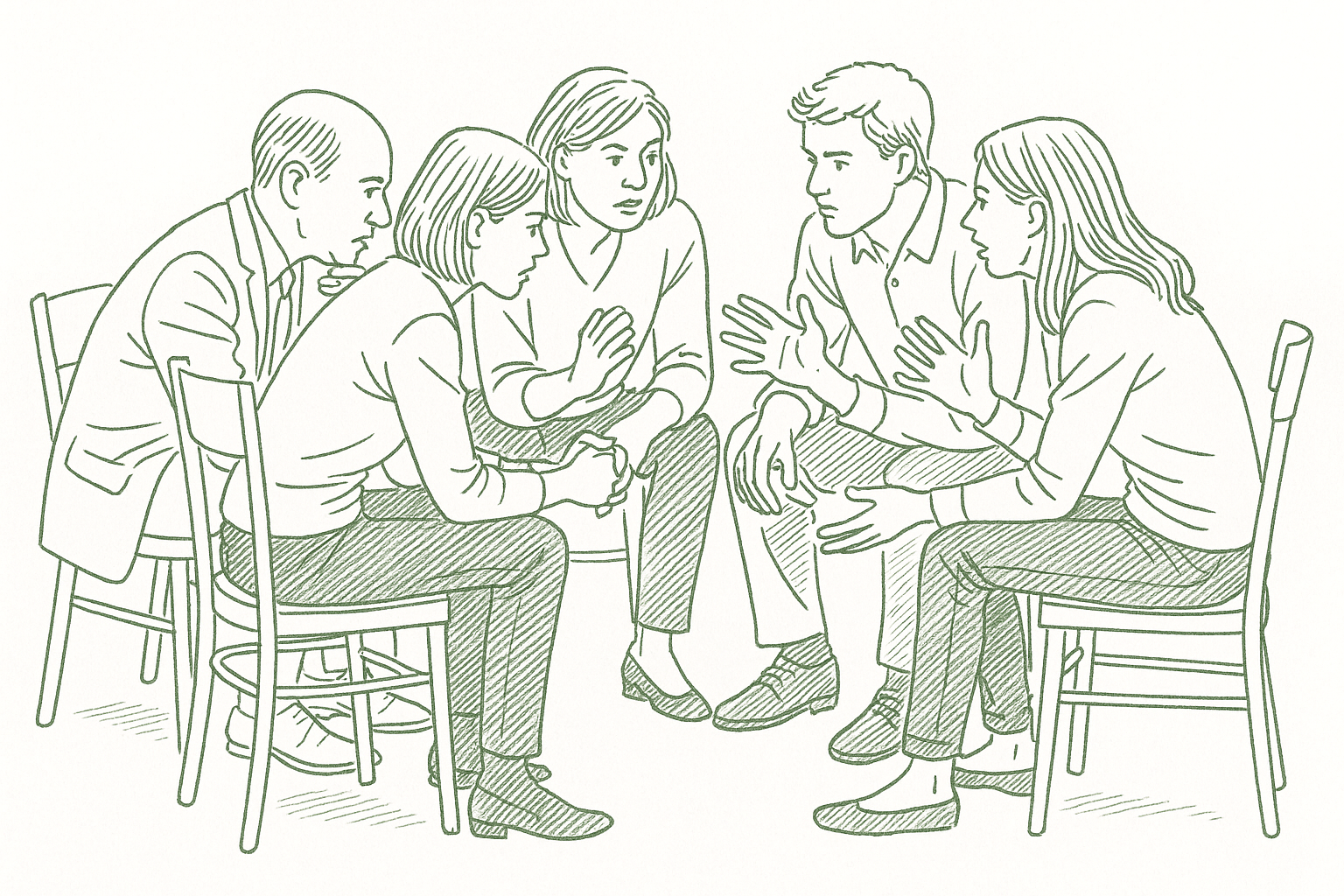
That disconnect is at the center of GoodGrowth, a new company being built inside Buffalo-based venture studio Radial Ventures. GoodGrowth uses AI to assemble and support small, trusted peer groups where founders, executives and other professionals can work through high-stakes challenges together.
“We spent the last 20 years building technology that expands our networks,” said Gorczyca, Radial Ventures’ VP of Product and GoodGrowth’s principal. “I think people are realizing that depth is far more valuable. When you get five credible people together who trust each other enough to talk about what’s really going on, you can actually help someone move forward.”
The idea draws from a long history of peer groups, from Benjamin Franklin’s Junto to modern executive networks such as Vistage. People gather with others they respect, bring difficult problems into the room and pressure-test their thinking.
GoodGrowth is building technology around that behavior.
There’s no new app to download. Users interact with GoodGrowth primarily through text messages with an AI facilitator named Adam.
Those interested in learning more about GoodGrowth can visit its website or engage with Adam via text at (716) 590-9748. Or reach out to Jonathan directly at jonathan@radialventures.com
Adam learns who they are, where they want to go and what’s getting in the way. It can help a member clarify a challenge, identify other people with relevant experience and bring that problem into a small group with the context required for a useful conversation.
Then the AI gets out of the way.
“The information is everywhere now,” Gorczyca said. “What’s scarce is trusted human judgment. You want someone who has walked that path, dealt with the consequences and is willing to give you candid feedback.”
Adam stays involved around the edges. It follows up on decisions, tracks commitments and can schedule a live conversation when a problem requires more attention. Over time, GoodGrowth builds a picture of each member based on their goals, experiences, challenges and progress.
That structure could have particular value inside organizations and existing professional networks, where expertise is plentiful but often poorly distributed. Someone on one side of a company may have already solved the exact problem keeping someone else awake on the other side.
GoodGrowth finds that connection.
The company is still early. GoodGrowth is seeking organizations interested in becoming design partners and running early pilots. The initial focus is on member-orgs like accelerators, executive networks, and companies that already have credibility and trust among their people.
Those organizations offer a natural proving ground for a concept Gorczyca believes could eventually stretch much further.
A founder might have one GoodGrowth group with other founders at a similar stage. That same person might also be a new parent and belong to a group for new parents. Someone navigating a career change, learning AI, or going through a difficult personal transition might have a different group altogether.
The common thread is a problem that has become more visible as our digital networks have expanded: access to thousands of people doesn’t necessarily mean having a small group you can rely on.
GoodGrowth is an early-stage portfolio company of Radial Ventures, the venture studio backed by the 43North Foundation to create and grow new companies in Buffalo. Gorczyca is one of the studio leaders charged with identifying problems worth building companies around and testing whether those ideas can become scalable businesses.
He sees GoodGrowth as a chance to pair one of humanity’s oldest tools — the trusted peer group — with technology capable of making those relationships easier to form and more productive over time.
“There’s a growing realization that the networks we’ve built aren’t giving people the depth they’re looking for,” Gorczyca said. “We have an opportunity to put the right people in the room, with the right context, at the right time, and help them work on their hardest problems together.”