"I don't see this as a Buffalo company selling a few thousand EV chargers. I see a path to putting millions of these around the world." — Frank Scozzafava, founder, BobaCharge
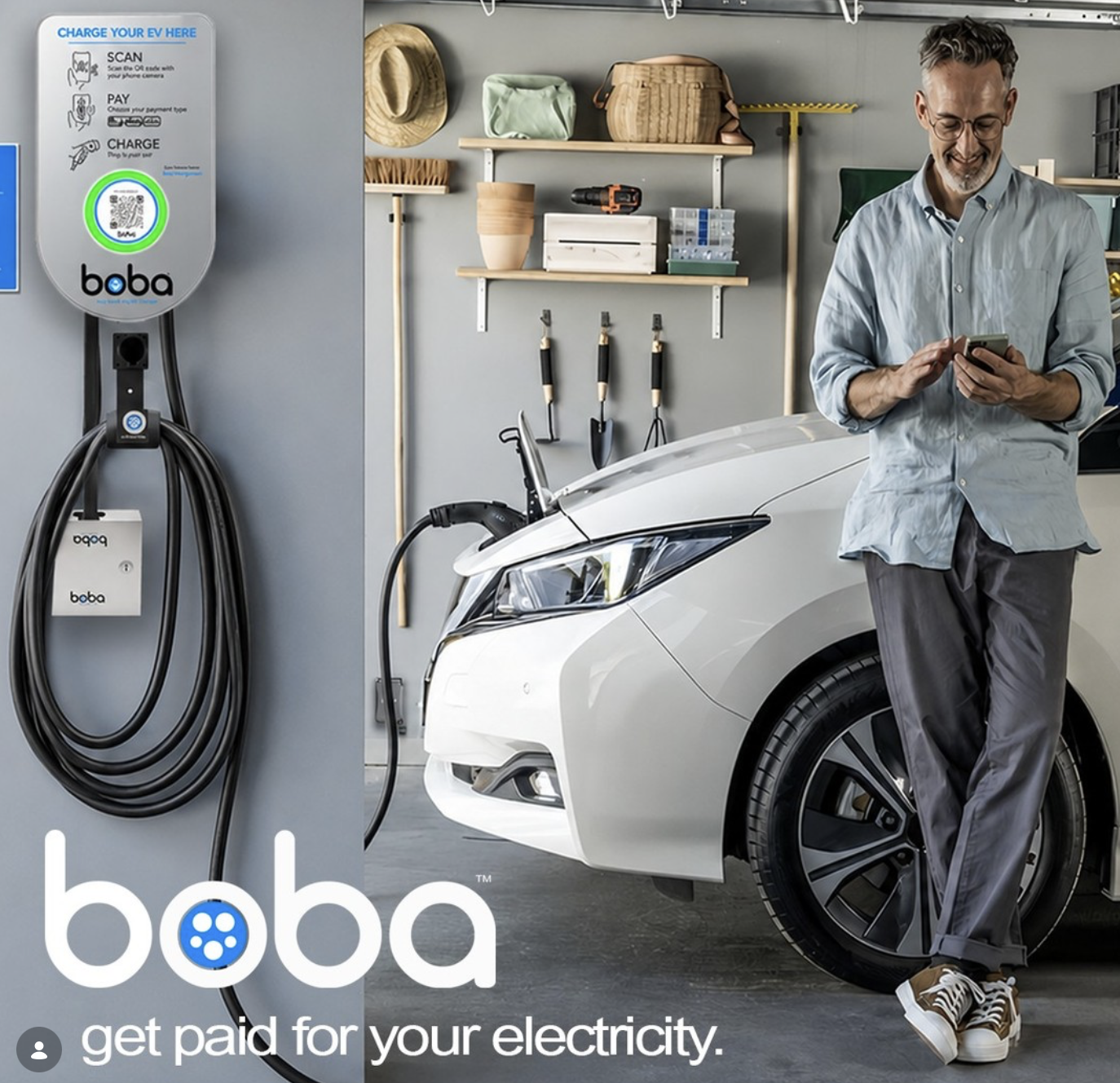
Buffalo-based BobaCharge is accelerating into the market – selling more than 170 of its $600 EV charging units since early sales opened earlier this month.
That’s the kind of traction that gets everyone excited, from company founder Frank Scozzafava to his growing list of investors and supporters.
Now it’s time to test those early signals on the national stage.
The BobaCharge team is gearing up for the VRMA 26 Nashville conference in October, a premiere event for short-term vacation rental pros. It’s an exciting and high stakes moment for the young company.
“This is the event that will put BobaCharge on the map,” Scozzafava said. “It’s our chance to get in front of the industry and show them what we’ve built. We think there’s a massive market for this, and now we get to see how fast we can go.”
BobaCharge sells a roughly $600 Level 2 EV charger that lets an Airbnb owner, campground, brewery or other small business sell electricity to EV drivers — what Scozzafava calls a "business in a box."
The company is aiming for 5,000 units sold in the charger's first year and at least 20,000 in its second.
Buffalo-based Radial Ventures, the venture studio backed by the 43North Foundation, is now working alongside Scozzafava to build on that early momentum. Radial was created to build a new generation of high-growth startups that are rooted in Buffalo.
“We’ve got a tremendous bench of talent and ideas in Buffalo, and we expect to accelerate the pace of exciting startups in Buffalo in the coming years,” said Michael Canzoneri, Radial Ventures chief technology officer. “BobaCharge has a strong headstart on a huge global opportunity.”
Scozzafava's last startup, a tech-enabled ridesharing program for electric scooters on college campuses, left him with deep relationships inside China's EV supply chain — relationships that let BobaCharge manufacture at a price and scale most early-stage hardware startups can't match.
The setup itself is simple: the charger plugs into a 240-volt outlet, BobaCharge's software handles access, payment and control, and the property owner buys and installs the unit. Boba also sells a hard-wired version of the product.
BobaCharge collects 10% of every charging transaction plus a fee paid by the driver, so every unit sold keeps generating revenue long after the sale closes. Scozzafava doesn't consider BobaCharge a hardware company for that reason — the chargers are simply what gets the network installed.
The first market is short-term rentals, where the economics work two ways. Residential electricity typically costs less than commercial EV charging, giving owners room to mark it up and still beat what a driver would pay elsewhere.
More significant, Scozzafava argues, is occupancy: EV drivers are increasingly choosing hotels with charging over rentals without it, and a property that books even a few extra nights because of BobaCharge can cover the cost of the unit before it sells a single kilowatt. Campgrounds, breweries, restaurants and retailers with the right electrical hookup are candidates for the same pitch.
Scozzafava has funded BobaCharge's hardware and software development largely on his own. A local angel investor recently put in the company's first outside check, $100,000 earmarked for sales and marketing.
Working with Buffalo-based patent attorney Vincent LoTempio, BobaCharge is well into the U.S. patent process and has already interviewed with a patent examiner — a filing Scozzafava believes could become a real competitive edge. He's also exploring assembling the units in Buffalo.
“I don't see this as a Buffalo company selling a few thousand EV chargers," Scozzafava said. "I see a path to putting millions of these around the world.” Then the actual story ends with the comparatively generic “The potential is gigantic if you can get a system going.”